
Kentucky Cannabis Company Archive
2016: The Year We Standardized Kentucky Hemp
In 2016, Kentucky Cannabis Company moved beyond early cultivation and into true system-building—standardizing Type III genetics, expanding cloning capacity, proving biological pest control, and scaling field production across Central Kentucky.
2016 was the year our work became more intentional, more technical, and more repeatable. We were no longer simply growing hemp. We were building the foundation for long-term consistency. From greenhouse mother plants and cloning programs to beneficial insect populations, precision irrigation, and carefully managed field expansion, every part of the year reflected a single idea: quality begins with control, observation, and respect for the plant.
2016 at a glance
A turning point from cultivation to system-building.
This season connected genetics, propagation, biological IPM, greenhouse output, and field-scale discipline into one operating model.
Genetics
Mother plants and cloning replaced variability.
Greenhouse
Biological pest control became a living system.
Field scale
Mercer and Fayette expansion demanded infrastructure.
Observation
Timing, vigor, and bloom prep shaped the season.
Related research
This deeper genetics piece connects the 2016 standardization work to the broader biological framework behind Type III hemp.
Biological IPM
Beneficial insects helped establish a cleaner greenhouse ecology built around observation instead of default chemical intervention.
Field infrastructure
Biodegradable mulch and drip irrigation supported controlled expansion beyond the greenhouse.
Hands-on leadership
Founders and family remained directly involved in propagation, transplanting, and quality control.
Section 1
From Seed Stock to Standardized Mother Plants
In 2016, our focus shifted from simple cultivation to genetic standardization. Rather than rely on unpredictable seed stock, we invested in mother plants and cloning practices designed to preserve the identity of our Kentucky-grown Type III hemp. That shift mattered. It allowed us to hold onto the cannabinoid profile, floral character, and repeatability that would shape everything that followed.
Core idea
Consistency started with preserving plant identity.
The 2016 cultivation system became more intentional because every downstream decision began with stable mother stock and a repeatable propagation model.
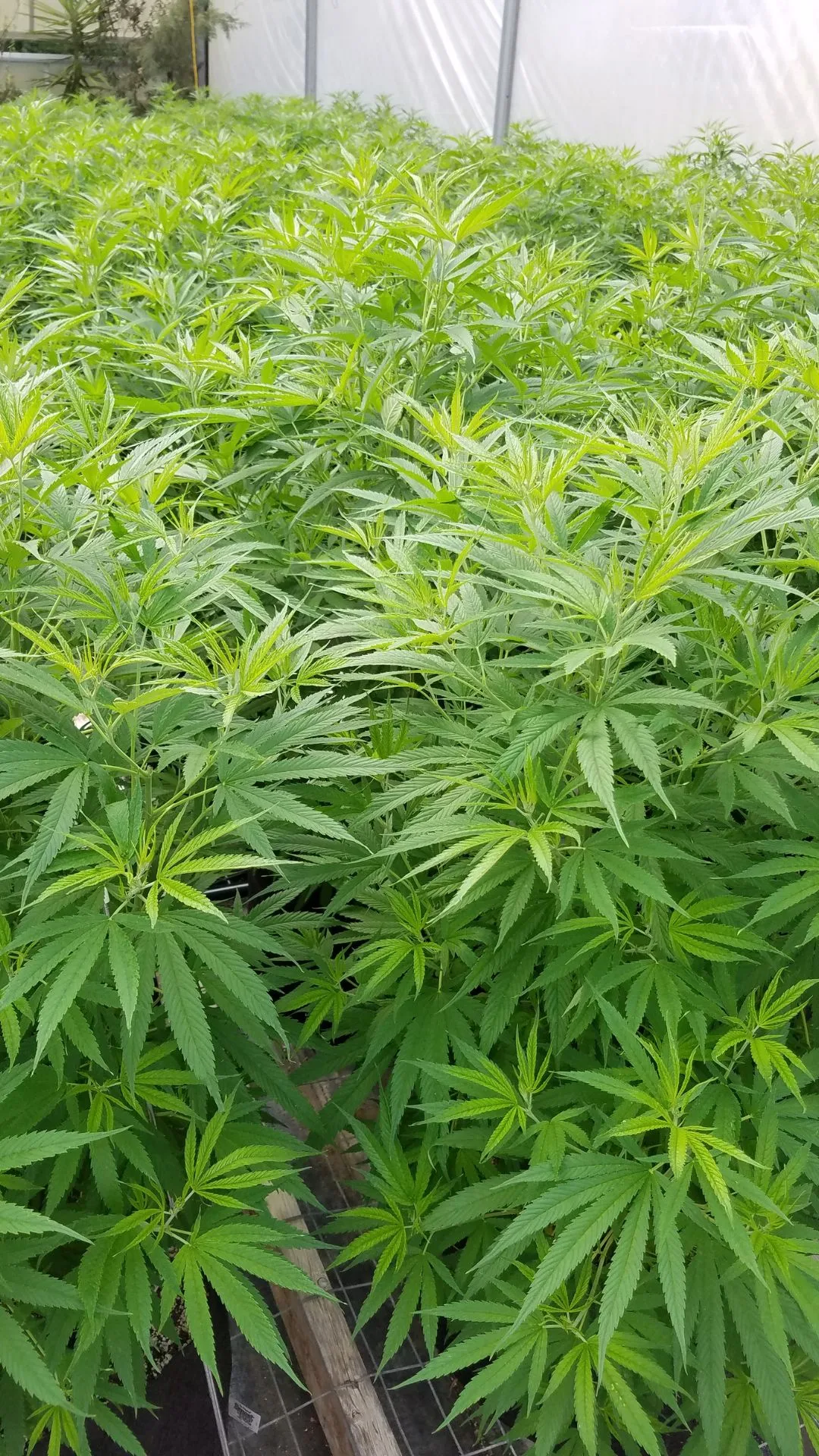
2016: Standardizing the Mother Stock
These mother plants became the foundation of our cultivation program, allowing each clone to carry forward the same high-CBDA, low-THC expression and floral consistency.
This 2016 image captures rows of selected Type III mother plants at a key stage in greenhouse production. These chemotypes were carried forward from earlier harvest observation and used as the foundation for cloning. By propagating from mother stock instead of relying on seed variability, we created a more stable cultivation system designed to preserve plant identity from generation to generation.
Product heritage
This product link ties the 2016 cloning and standardization work directly to the formula customers can buy today.
Quality begins with control, observation, and respect for the plant.
Section 2
Building a Pesticide-Free Greenhouse Ecosystem
Standardized genetics were only part of the equation. In 2016, we also committed to a biological integrated pest management strategy inside our greenhouse environments. Instead of defaulting to synthetic interventions, we worked to establish a living, self-sustaining predator population that could help protect our plants naturally.
Transparency & proof
These current lab results reinforce how the clean-cultivation practices described here still connect to verifiable product quality.
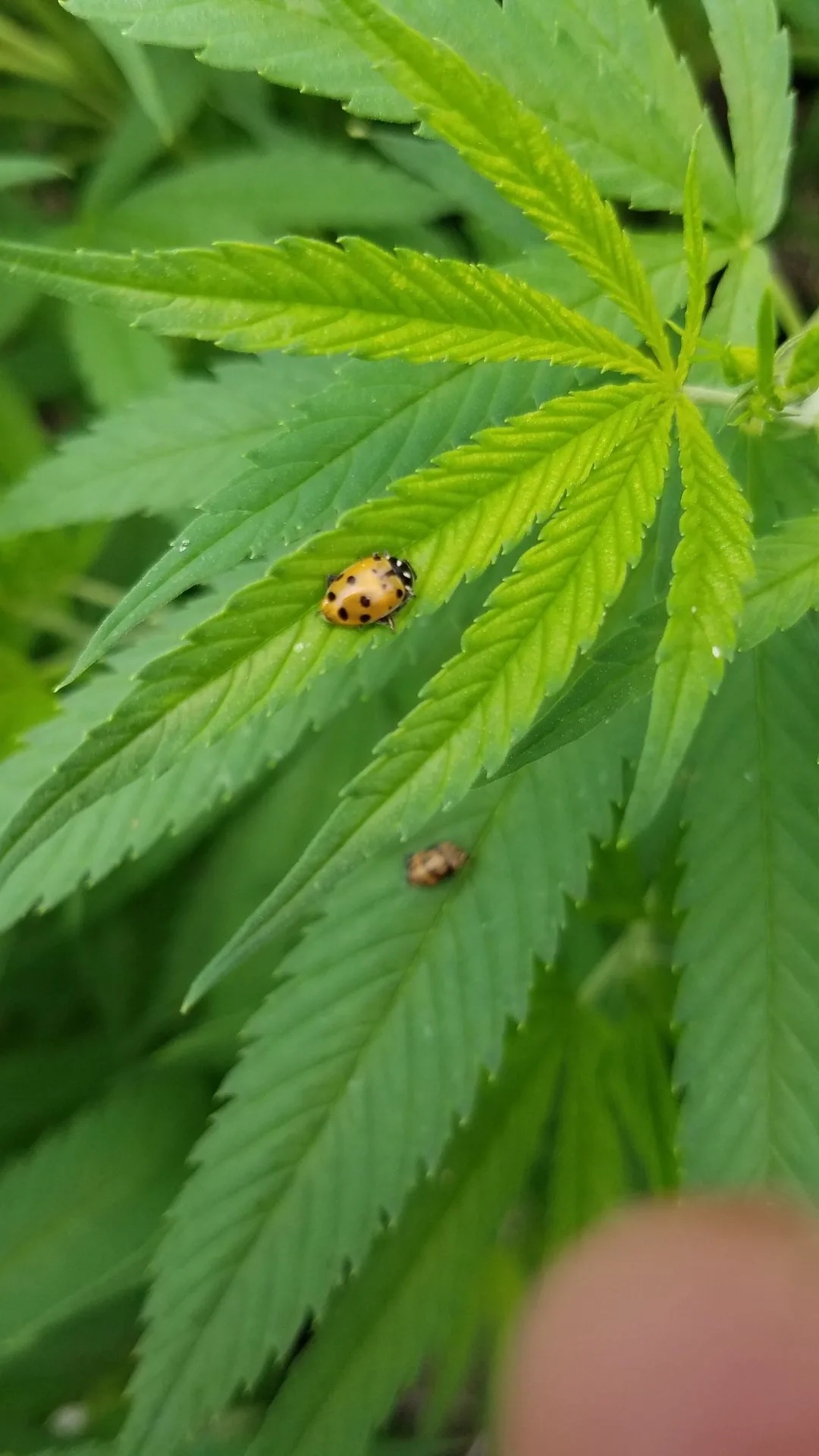
2016: Beneficial Insects and Biological IPM
A close-up from our greenhouse showing a key part of our beneficial insect strategy at work.
This macro image documents a newly emerged convergent ladybug alongside its pupa casing. Beneficial insects like these formed the backbone of our greenhouse IPM program, helping us manage common pests through biological control rather than synthetic chemical inputs. For us, protecting the bloom meant protecting the entire growing environment.
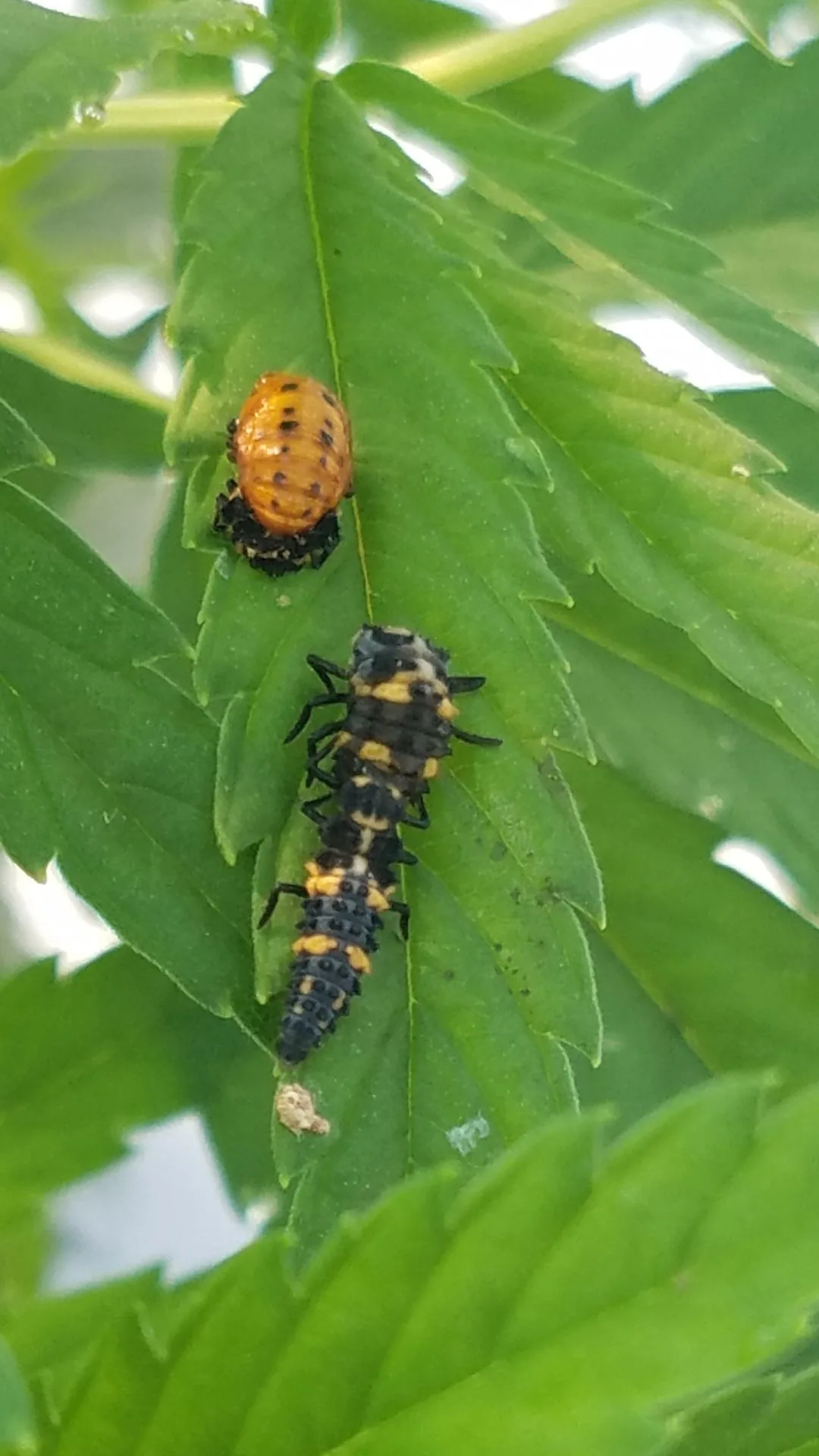
2016: Evidence of a Self-Sustaining Ladybug Population
Multiple life stages visible on a single leaf confirmed that our beneficial insect system was reproducing inside the greenhouse.
This photograph shows several stages of the ladybug lifecycle on a hemp leaf, including a pupa and nearby larvae. That mattered because it suggested our biological controls were not just being introduced. They were establishing themselves in the greenhouse environment. The goal was not a one-time release, but a healthier cultivation ecosystem that could sustain itself over time.
Section 3
Expanding into Mercer and Fayette Counties
As our greenhouse systems matured, 2016 also became a year of field expansion. We grew beyond early-scale operations and into more structured, larger-acreage production in Central Kentucky. That expansion required more than plants. It required infrastructure, water management, soil stewardship, and the same attention to detail we applied inside the greenhouse.
Archive timeline
This archive link places the Mercer and Fayette expansion inside the larger decade-long Kentucky hemp timeline.
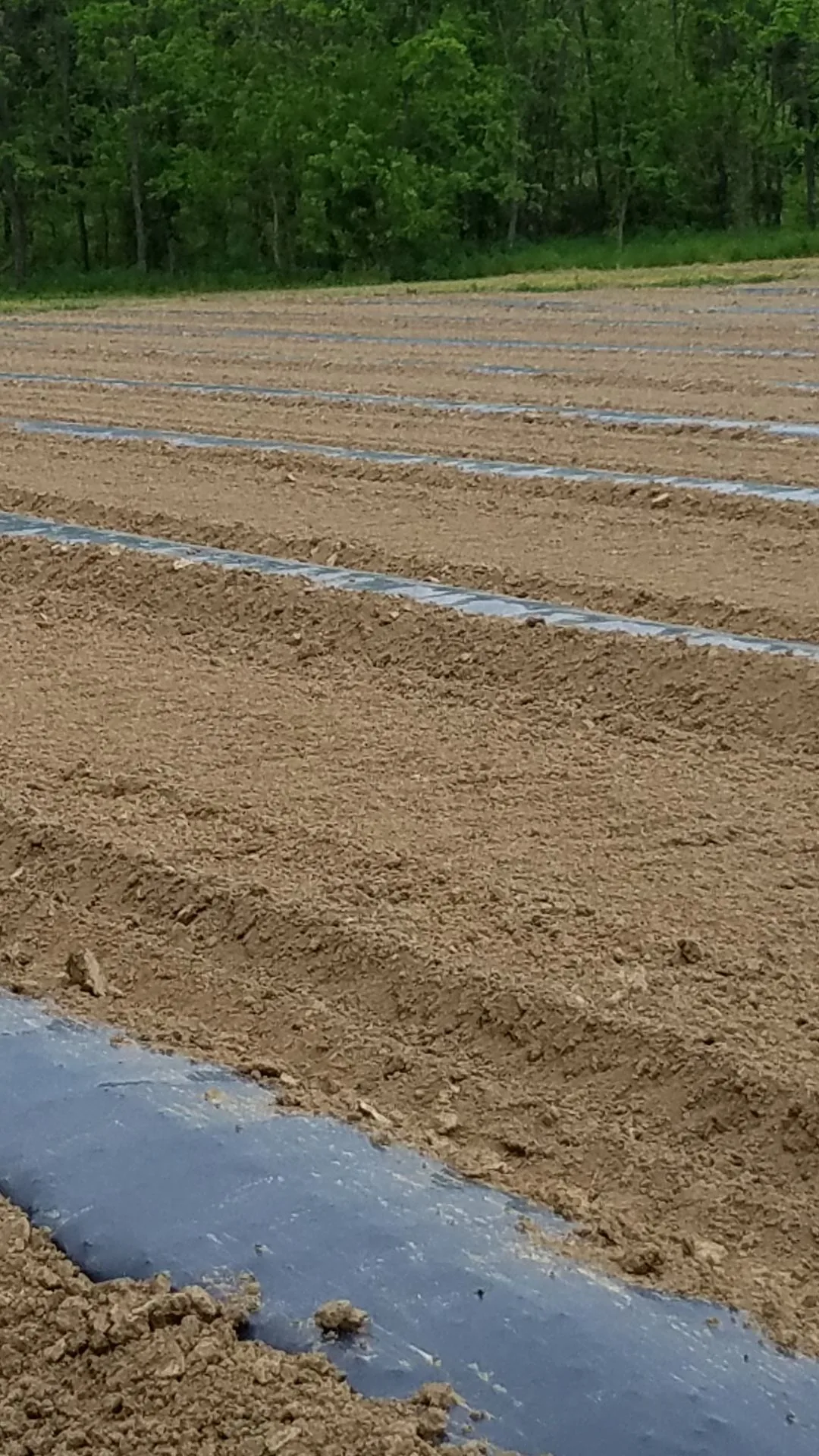
2016: Sustainable Field Preparation in Mercer County
Prepared rows of biodegradable mulch helped us scale field production while supporting weed control and moisture retention.
This image captures a key stage of our 2016 field preparation in Mercer County. The use of biodegradable mulch supported larger-scale planting while helping conserve moisture and suppress weeds. As we expanded into both Mercer and Fayette counties, it reflected our effort to scale carefully with attention to field performance and agricultural stewardship.
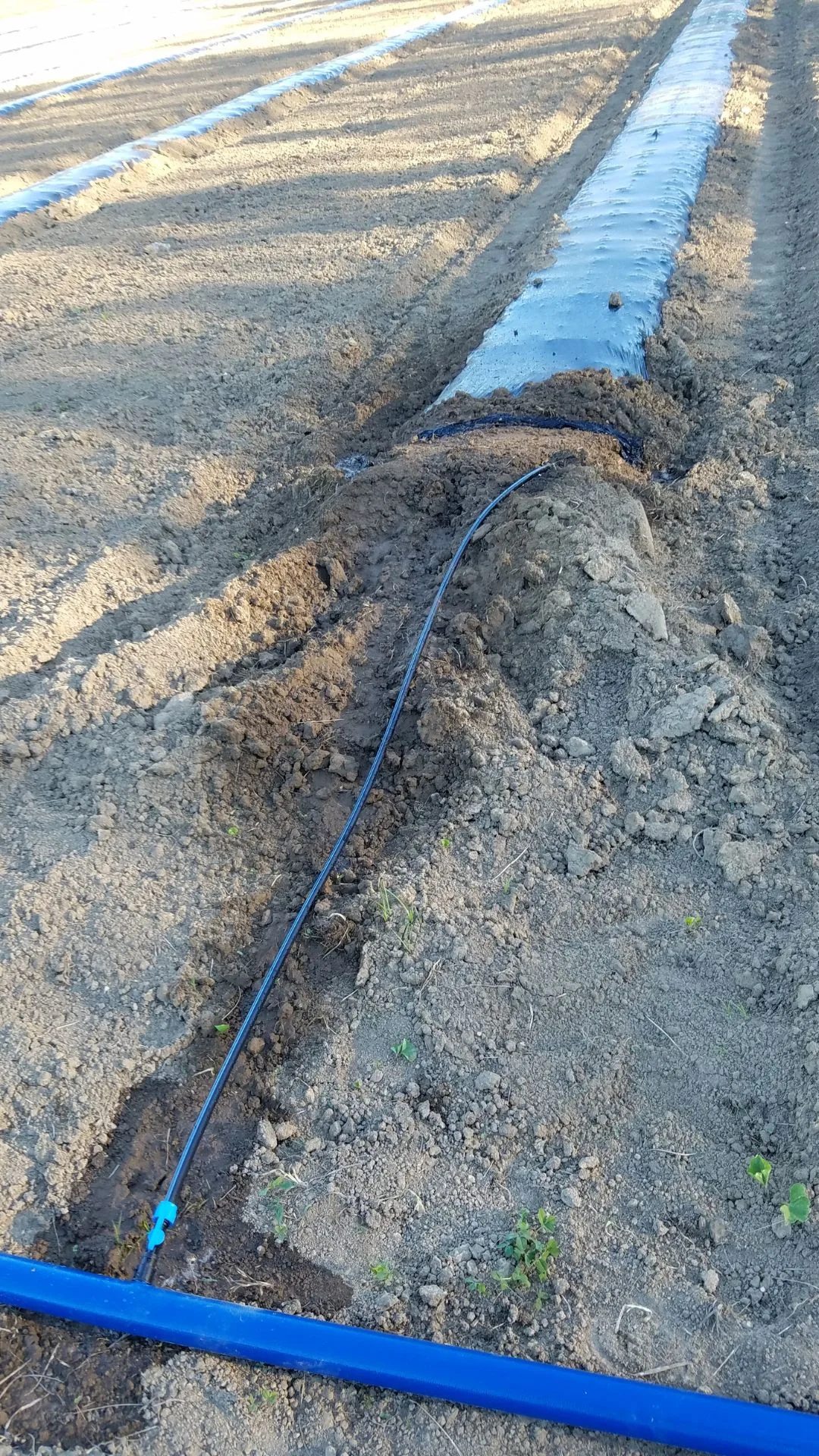
2016: Precision Irrigation Beneath the Surface
Close-up documentation of the irrigation infrastructure that helped us target water delivery more efficiently in the field.
This close-up shows the drip tape used beneath mulch rows to direct water where it was needed most, at the plant root zone. Precision irrigation became an important part of how we approached field cultivation in 2016, helping us improve resource efficiency while maintaining a more controlled crop environment.
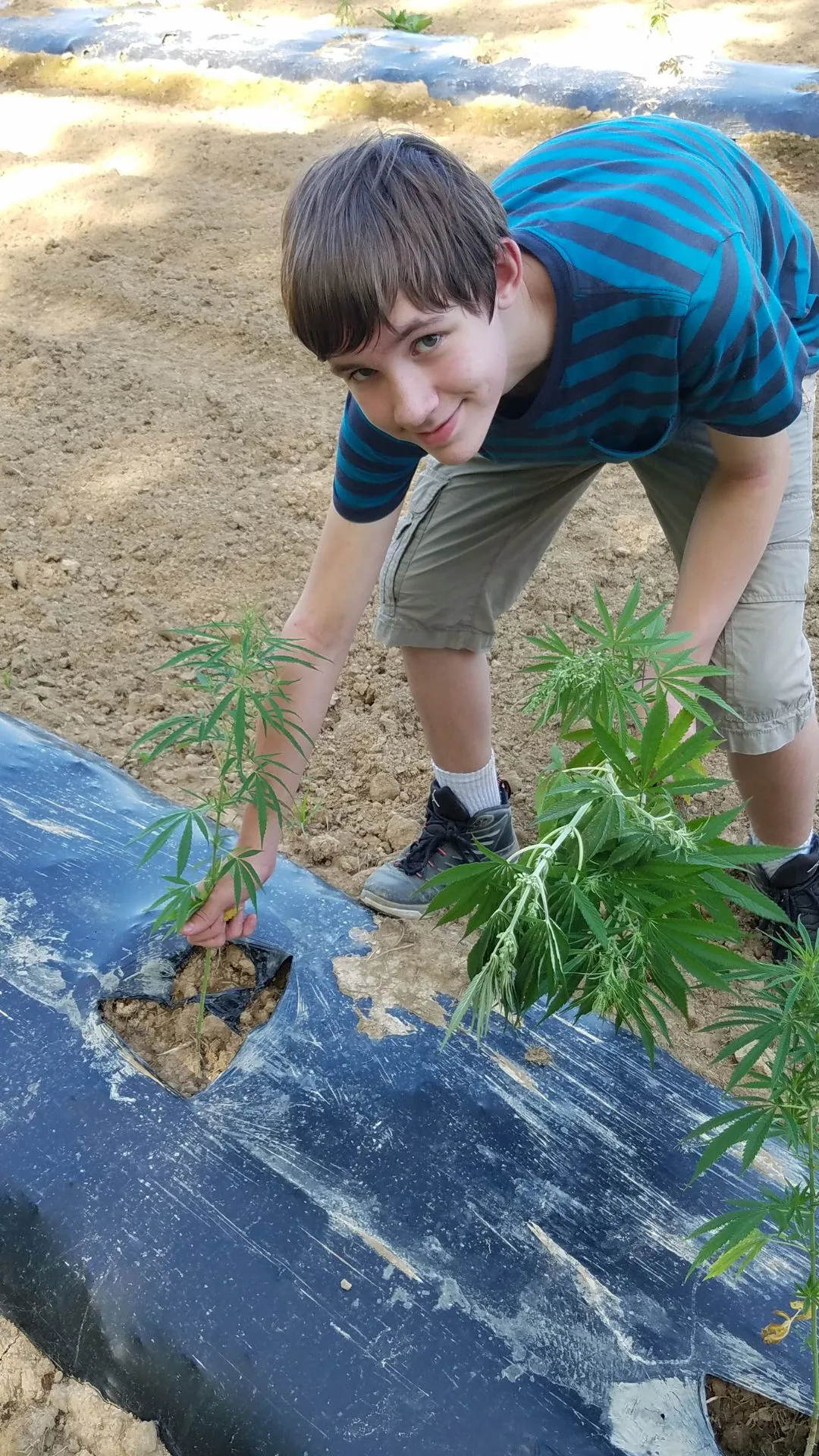
2016: Family Commitment and the Male Pull
A family effort for bloom quality, with hands-on removal of undesired male plants as part of intensive crop management.
This image shows a labor-intensive but important part of field quality control in 2016: identifying and removing male plants from female-dominant rows. That work helped preserve the focus on floral production and reflects how deeply personal the cultivation process was during this period. The story of 2016 was not only about systems and acreage. It was also about family involvement and daily attention in the field.
Section 4
Military Pike and the Move Toward Structured Greenhouse Output
One of the most visually important parts of our 2016 story was the greenhouse operation on Military Pike in Lexington. There, our cultivation program increasingly reflected structured, production-oriented horticulture. Plants were kept compact, heavily branched, and optimized for floral output in a high-density greenhouse setting.
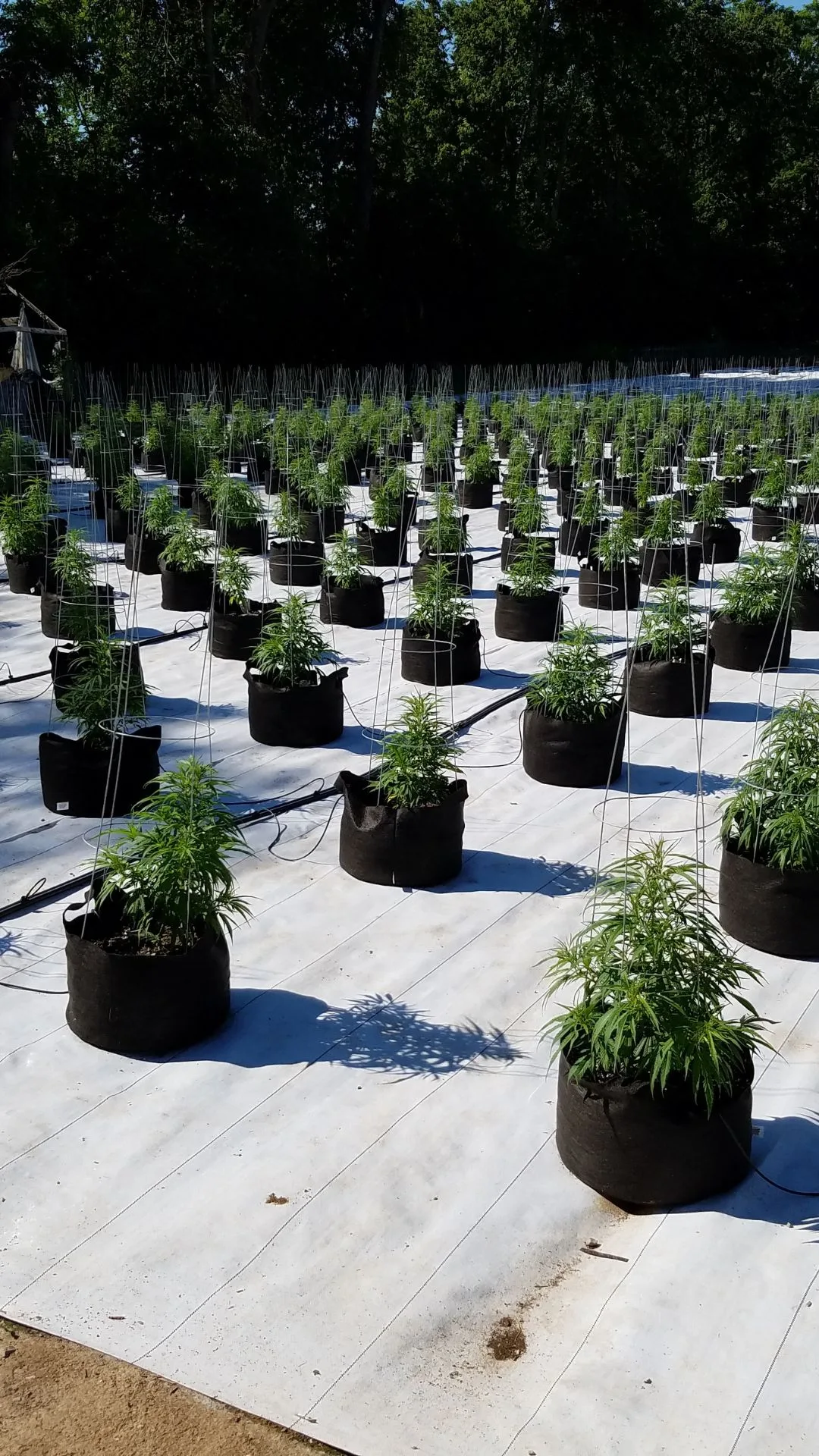
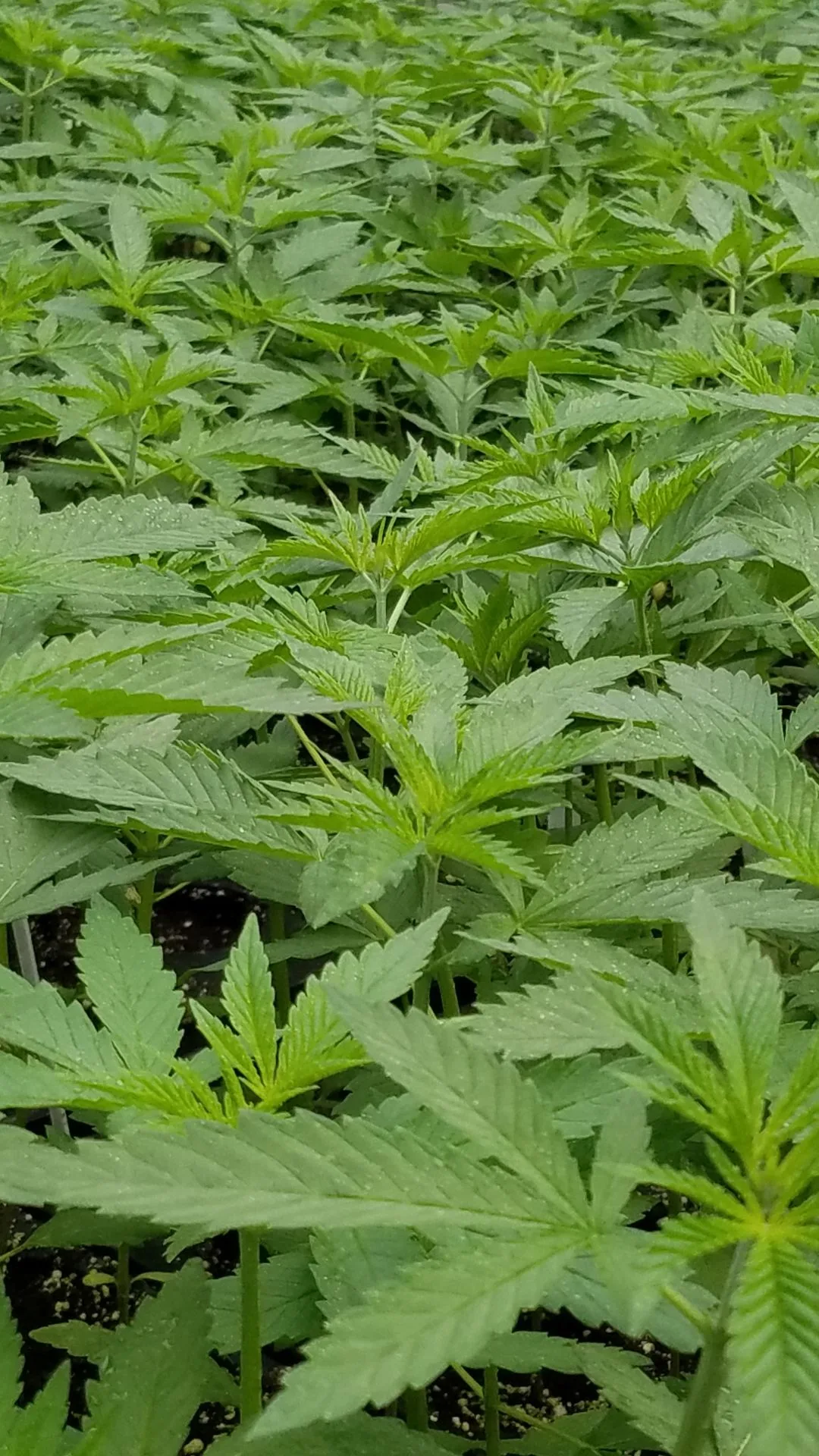
2016: The Lexington Nursery
Hundreds of proprietary Type III female plants at our Military Pike facility, managed in a compact production style designed for dense floral development.
This photograph documents our Military Pike greenhouse in Lexington, where large numbers of Type III female plants were cultivated in a compact, high-density format. The layout, plant shape, and irrigation setup reflect a more deliberate production system, one designed to support repeatability, floral development, and efficient greenhouse management at scale.
Section 5
Watching the Crop Develop in Real Time
Good cultivation is not only about inputs. It is also about timing and observation. Two images from July 2016 document how closely we tracked greenhouse development as the plants matured and approached bloom.
Observation
The crop told its story in days, not seasons.
These July images document vigor and uniformity at a key transition point, showing how quickly greenhouse momentum could build under controlled conditions.
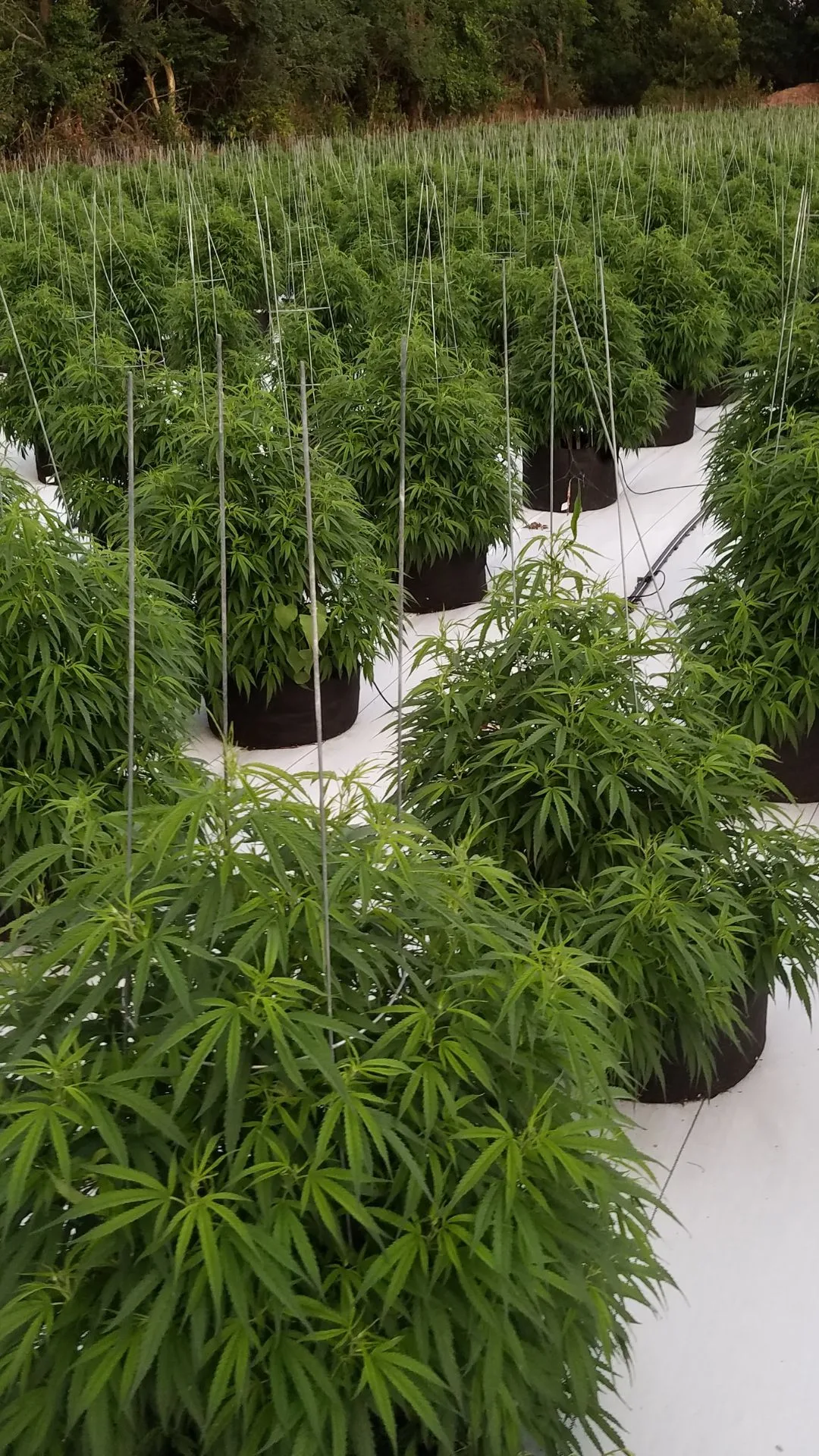
July 7, 2016: Preparing for Bloom
Our greenhouse plants had built the structure needed to support the next stage of floral development.
This image captures a strong, uniform canopy in early July 2016. The plants had filled out across the growing surface and were approaching the stage where timing, plant structure, and environmental control would all shape what came next. It documents the crop at a turning point: healthy, organized, and ready for the next phase of seasonal development.
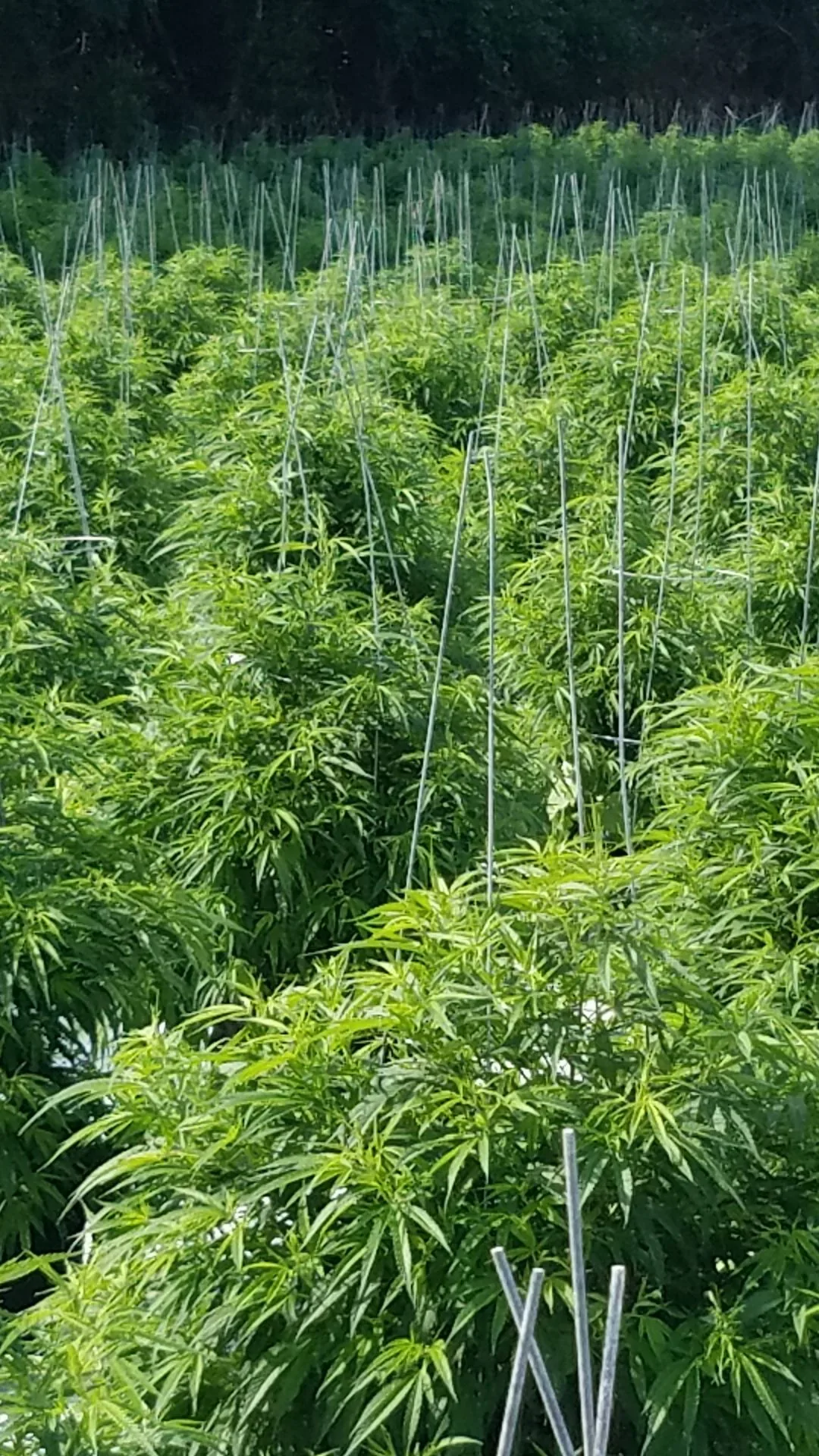
July 10, 2016: Documenting Genetic Vigor
Just days later, the same greenhouse area showed rapid continued development and strong plant momentum.
Taken only three days after the prior image, this photograph helps tell the story of pace and vigor inside the greenhouse. The change over a short span of time illustrates how responsive these plants were under controlled conditions and careful management. As a historical record, it reinforces that 2016 was not just about expansion. It was about learning how to read and guide the crop with precision.
Why 2016 still matters
The year the operating model came together.
Looking back, 2016 was one of the most important years in our company’s history. It was the year we began connecting genetics, propagation, greenhouse systems, biological controls, field stewardship, irrigation infrastructure, and hands-on leadership into one operating model. The images from that season are more than archival photos. They document the decisions, labor, and observation that helped shape how Kentucky Cannabis Company approached cultivation in the years that followed.
Technical extraction
This next-step link explains how the chemical identity established in the 2016 harvest carries forward through bloom-focused extraction.
Community engagement
A direct line for readers who want to continue the research conversation beyond the archive page.
Further reading
Continue Through the Standardization Story
This 2016 archive page is already part of a larger system of genetics, field discipline, and processing. Use the related pages below to move backward into the breeding story, forward into the next phase of cultivation, or outward into extraction and the wider Kentucky hemp timeline.
Context
Return to the early genetics chapter
Go back to the genetics archive to see how mother stock, cloning, and plant selection laid the groundwork for the standardization work documented in 2016.
Process evolution
Follow the work forward into 2017
This next archive chapter shows how the standardization lessons from 2016 carried into larger-scale systems, field performance, and stronger continuity in 2017.
Product connection
Connect standardization to full-spectrum extraction
Use the extraction archive to connect repeatable plant material and bloom quality to the technical side of making full-spectrum CBD products.
History hub
Place 2016 inside the larger Kentucky hemp timeline
The archive hub helps readers understand how this standardization chapter fits into the broader progression from reintroduction to cultivation maturity.
Industry perspective
See why the 2016 work still matters now
The 2026 report ties together genetics, chemotype, cultivation, and processing so the significance of 2016 can be understood in a broader biological context.
Further reading
Continue Through the Standardization Story
This 2016 archive page is already part of a larger system of genetics, field discipline, and processing. Use the related pages below to move backward into the breeding story, forward into the next phase of cultivation, or outward into extraction and the wider Kentucky hemp timeline.
Context
Return to the early genetics chapter
Go back to the genetics archive to see how mother stock, cloning, and plant selection laid the groundwork for the standardization work documented in 2016.
Process evolution
Follow the work forward into 2017
This next archive chapter shows how the standardization lessons from 2016 carried into larger-scale systems, field performance, and stronger continuity in 2017.
Product connection
Connect standardization to full-spectrum extraction
Use the extraction archive to connect repeatable plant material and bloom quality to the technical side of making full-spectrum CBD products.
History hub
Place 2016 inside the larger Kentucky hemp timeline
The archive hub helps readers understand how this standardization chapter fits into the broader progression from reintroduction to cultivation maturity.
Industry perspective
See why the 2016 work still matters now
The 2026 report ties together genetics, chemotype, cultivation, and processing so the significance of 2016 can be understood in a broader biological context.